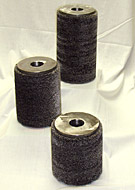
Cylinder Brushes
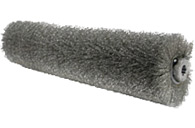
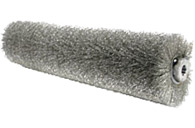
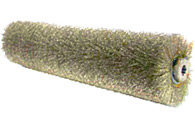
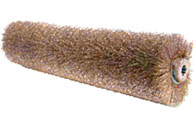
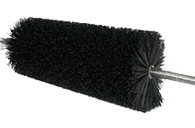
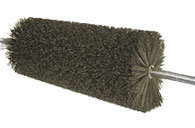
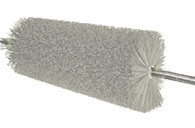
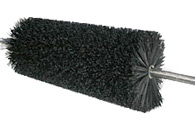
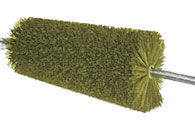
Cylinder brushes are used for conveyor cleaning or wide face brushing of a substrate in a production environment. Spiral wound cylinder brushes are based on our strip brush technology, and are individually designed to meet the customer's specifications. Paddle wheel style conveyor cleaning brushes also utilize our strip brush technology and offer a customer refillable brush core.
Spiral Brush has cylinder brush design experience in a broad range of applications including: agriculture, bakery oven belts, battery production, block and brick production, concrete form cleaning, fiberglass insulation, filtration screen cleaning, foundry sand conveyors, glass cleaning, industrial pass-through ovens, metal fabricating, paper mills, oil & gas pipeline inspection, primary metals, printing, raised metal roofing, rubber and plastics, sawmills and plywood production.
Our engineers and experienced customer service associates work with you to understand the application, the material to be brushed, the desired finish, the operating environment, and the equipment on which the brush will be installed. We will help you to determine the appropriate core, shaft, channel size and brush materials, establish power requirements, a recommended range of operating speed, and determine the need for dynamically balancing the cylinder brush.
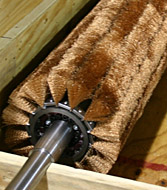
Spiral wound cylinder brushes are typically mounted on a shaft or a tubular core. Brush strip is wound around and attached to the arbor in the appropriate density or spacing. Close-wound conveyor cleaning brushes present a dense brush face and provide a consistent wide face scrubbing action. Open-wound brushes have spacing or pitch between the rows of helically-wound brush strips to facilitate moving loose product or debris to one side, to both sides, or to the center. Cylinder brush outer diameters range from 1 5/8" to 45", while inside diameters range from ½" up to 30" or larger. Cylinder brushes can be up to 20 feet long. The strip channel material options are galvanized steel, stainless steel, brass and aluminum. The shaft or core onto which the brush will be mounted can be made of steel, stainless steel, or other materials suitable for the application.
Mounting Options:
- Shaft: Spiral can manufacture a solid or tubular shaft to the customer's drawings or specifications, or the customer can supply their own shaft. Shafts may include keyways as required for drive purposes. Brushes can be welded directly to the shaft or secured by means of metal clips attached to the shaft. Brushes mounted on a shaft are typically refillable as long as the shaft remains in good condition.
- Throw-Away Core: For the convenience of easy replacement, Spiral can assemble the brush on an economical thin wall tube with end-bushings to be mounted onto the customer's driven shaft. Rather than maintaining a spare brush on hand and returning the entire worn brush for refill, simply order a n ew brush and install it in the place of the old brush.
- Refillable Core: For a more economical long term solution, the core can be made from heavier wall tube and can be returned for refill multiple times. The shaft or journals may be an integral part of the core design or may be removable for ease of replacement. Refilling saves the cost of remaking the shaft or core.
- Unmounted Brush Refill: Customers may choose to buy the loose wound brush coil to mount on their own shaft or cores.
- Dynamic Balancing: For brushes operating at speeds in excess of 500 revolutions per minute, dynamic balancing is recommended to reduce vibration and improve the consistency of brushing action.
- Crating: Due to weight, size, and other shipping considerations, cylinder brushes over a certain size will be considered for packaging in a wooden crate which may be reused for future refill transportation purposes. This determination is made at the time of brush design, and the cost of the crate is quoted separately.
Brush Fill Materials:
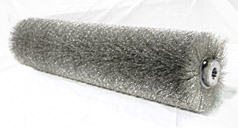
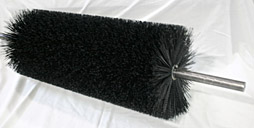
Cylindrical conveyor cleaning brushes can be filled with any of our selection of materials: steel wire, stainless steel wire, brass wire, bronze wire, or other more specialized wire types, nylon 6-6 or 6-12, abrasive nylon, conductive nylon, polypropylene, polyester, polyethylene, horsehair, tampico fiber, and other materials on request.